Author: admin

  • Designing Two Brands That Share the Same DNA

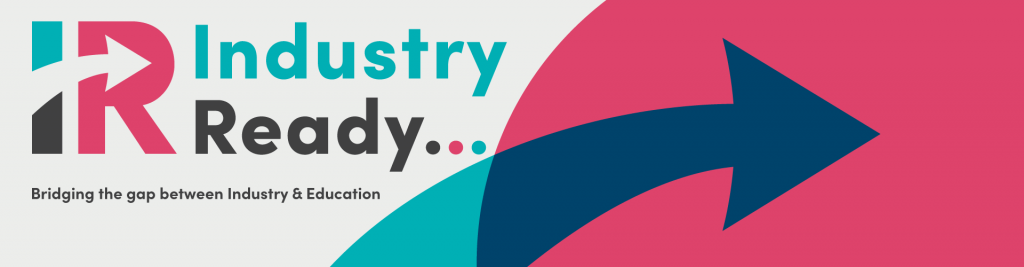
    Bridging the gap between Industry & Education.

    That’s not marketing speak. Specifically, it’s the actual problem I was asked to solve when designing the brand for Industry Ready, a new podcast that’s genuinely excellent (and I don’t say that lightly).

    Hosted by Sonya D’Arcy-Kilroy with guests like Geoffrey Fowler, CEO of London Design & Engineering UTC, each episode goes behind the scenes of “Exceptional” (Ofsted-rated) education. You’ll hear from learners achieving remarkable outcomes, educators creating inclusive cultures, and industry partners who are actively solving the skills gap – not just talking about it at conferences.

    The Challenge I See Every Day

    As a brand designer working in the education space, I see both sides of this challenge playing out constantly. Too many learners enter the workforce unprepared. Too many employers struggle to find industry-ready talent.

    It’s a real problem. And it needs real solutions, not just more noise.

    The Design Connection

    Here’s where it gets interesting for me as a designer.

    Industry Ready isn’t a standalone project. It’s the natural evolution of my work on The Industry & Educators Exchange (IndEX) at the-index.uk. Essentially, both brands share the same DNA because they’re solving the same problem from different angles.

    Specifically, I devised the name ‘IndEX’ and its typographic use with the capital EX, designed both brands, both websites, and the supporting books (Introduction & Compendium) that bring these ecosystems to life.

    IndEX connects educators and industry partners through employer-led learning, shared resources, books, and frameworks.

    Industry Ready amplifies those connections through authentic conversations and real stories.

    Designing a Brand Family

    The visual challenge was clear: create two distinct brands that feel like family.

    Visually, both identities colour palette, typeface, and use directional arrow forms that represent clear pathways, progress, and connection – not barriers. They’re designed as a family, working together to solve the same problem from different angles.

    The brief to myself? Professional but not corporate, similarly educational but not academic. Authentic and conversation-led. A direction and clear route, not a barrier.

    Why This Matters

    Importantly, Episode 1 launched today and it’s a brilliant introduction to what makes London Design & Engineering UTC (LDE UTC) and the Technical Education Skills Trust (TEST) so successful.

    So, If you’re in L&D, hiring, education, or workforce development, give it a listen. It’s worth your time.

    Listen and see the design work: www.industryready.co.uk

    Need help with your brand or website? Get in touch.
  • ChatGPT is My Sketchbook. Not My Press Release.

    I use ChatGPT the same way I use a sketchbook.

    Not for finished work.
    Not for polished thinking.
    And definitely not for anything I’d want taken out of context.

    It’s where the messy thinking lives. Rough ideas. Half-finished thoughts. The sort of thinking you wouldn’t read out in a meeting, but absolutely need to get somewhere useful. Like any creative tool, its value is in what happens before the outcome.

    As a graphic designer, I’ve started using ChatGPT much earlier in my creative process. Not to replace thinking, but to support it. To test language. To explore ideas. To think out loud. That makes it incredibly useful, but it also raises sensible questions around privacy and how AI tools handle work-in-progress ideas.

    Recently, while attending an Implementing AI training course, I was given a small but important nugget of privacy wisdom by one of the AI professionals leading the session. It’s the sort of thing that’s easy to miss, but worth knowing if you’re using ChatGPT regularly, especially for creative work or client-facing projects.

    Check your ChatGPT data controls

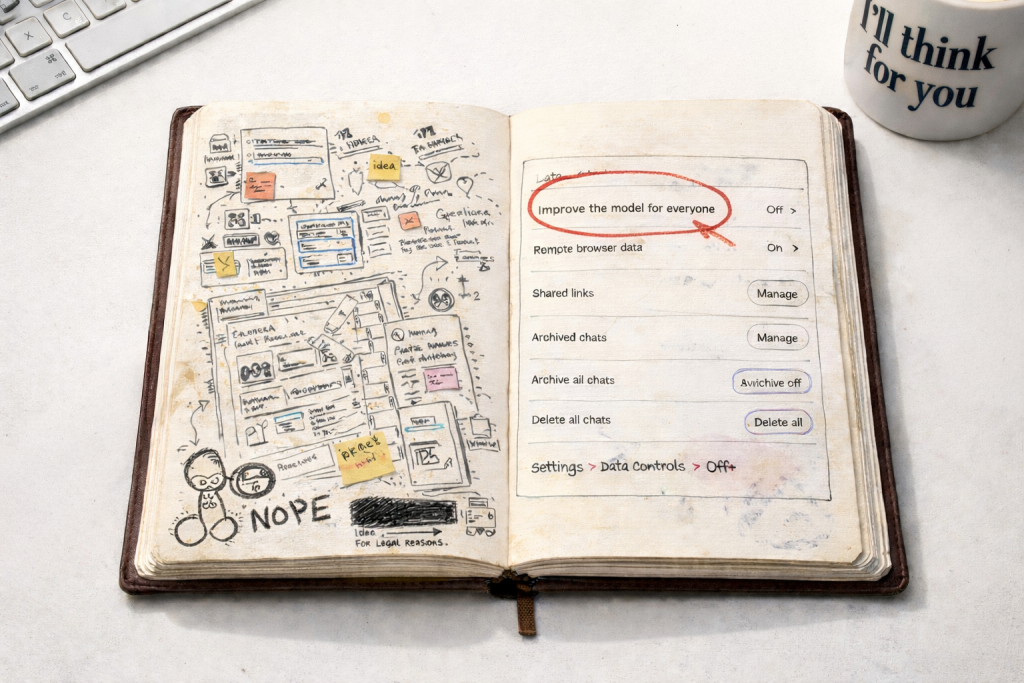
    Inside ChatGPT’s settings, there’s an option called “Improve the model for everyone.” When this is enabled, your conversations may be used to help train and improve the system.

    That might be absolutely fine for some people. But if, like me, you use ChatGPT as part of your design thinking process, to explore early concepts, draft copy, or work through client challenges, you might prefer to keep that material private.

    The important thing is that you have a choice.

    Turning it off takes less time than making a cup of tea:

    Settings → Data Controls → “Improve the model for everyone” → Off

    You can also go directly to the ChatGPT data controls page here: https://chatgpt.com/#settings/DataControls

    Switching this setting off doesn’t affect how you use ChatGPT day to day. It simply means your new conversations won’t be used to improve the model.

    A small setting. A sensible habit.

    This kind of thing feels like basic housekeeping. Not dramatic. Not paranoid. Just thoughtful.

    As designers, marketers, and creative professionals, we’re increasingly using AI tools like ChatGPT as part of our thinking process, not just as production tools. That makes it even more important to understand how AI privacy settings work, and how our ideas are treated while they’re still forming.

    Sketchbooks have always been private spaces. AI doesn’t change that expectation, but it does mean we need to be a little more deliberate.

    If you’re curious about how I actually use ChatGPT in my graphic design work, the prompts, the roughs, the false starts, and the thinking behind the thinking, feel free to get in touch. I’m always happy to share what’s working, what isn’t, and how AI can support creative work without replacing it.

    Like any good sketchbook, it’s not about the answers.
    It’s about having somewhere safe to think.

  • The advantages of humans

    I called the doctor today.
    The AI system was fine.
    But within about 20 seconds, I wanted to speak to a human.

    I was told recently that one of my marketing manager contacts has to log design feedback and amends into a CRM system.

    How does that work when you are trying to explain complex or subtle changes?
    Then you wait for a written reply.
    What happens when something is urgent, or a deadline is fast approaching, and you need rapid design for marketing managers?

    When you call Signal Studio, you don’t get put through to an AI chat or account manager.
    You get put through to me. A human.
    In my specific case, Keith the graphic designer.

    Call me and tell me exactly what you need.
    We can discuss changes, amends and feedback together.
    All the spoken information, and the unsaid stuff too, the pauses, the tone, the emphasis, go directly into my brain and come out as beautiful graphic, brand and website designs.

    Human communication is best.

    Audiences are looking for humanity.
    For a human touch.
    The creativity of AI is questionable. It has not experienced life. It looks at what humans have already designed and regurgitates it. Usually quite badly.

    If you want design that your audience understands, use a human.

    Use me.
    Keith the graphic designer.

    If this sounds like how you prefer to work, pick up the phone.

    You’ll get me.

    Keith the graphic designer.

  • Ain’t Nobody Got Time for That

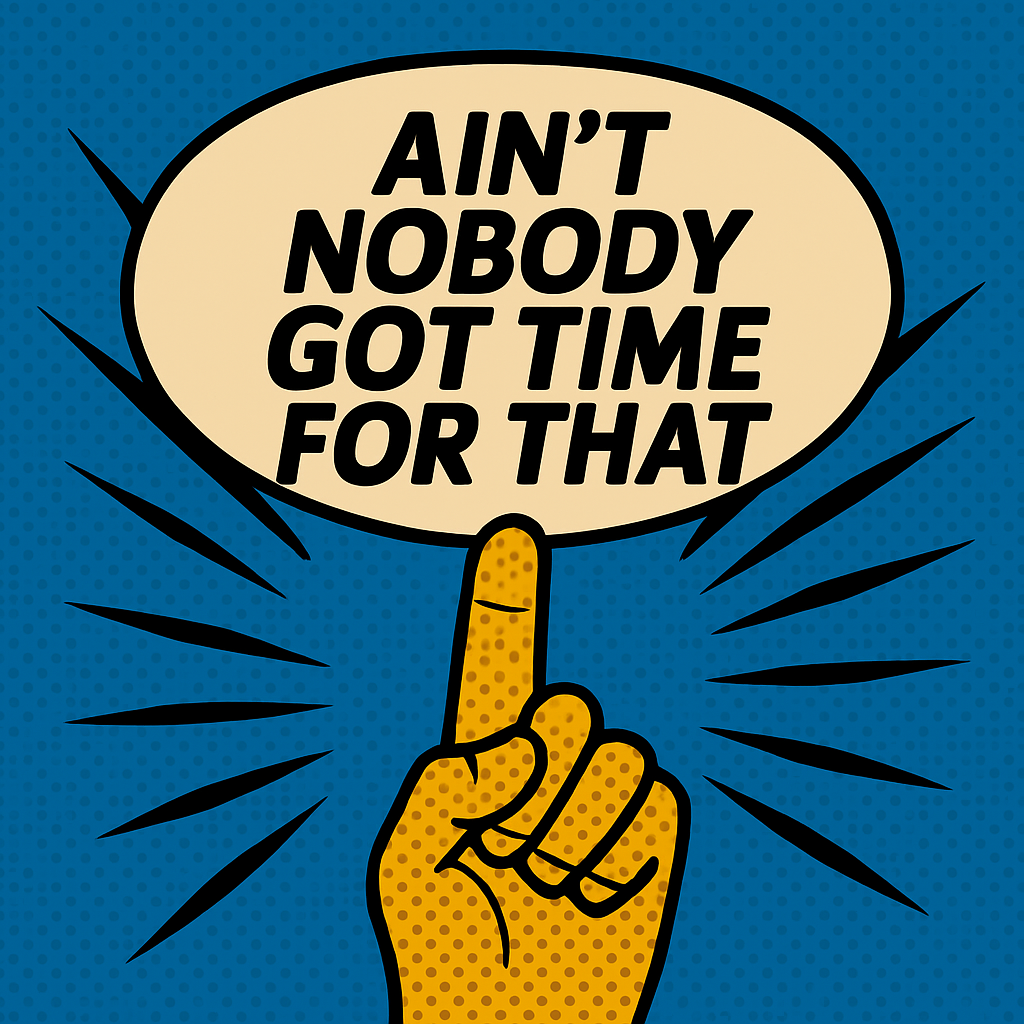
    Cartoon style graphic of a hand pointing to a speech bubble saying "Ain't Nobody Got Time for That."

    If you were designing your own house, you wouldn’t try to be the Architect.

    You’d hire someone who knows what they are doing (I hope).

    Because structure matters.
    Planning matters.
    Your time matters.
    Getting it right from the start matters.

    Marketing and branding design is the same.

    Squarespace. Canva. Templates. Late nights.
    They work well for some professionals.
    But they cost your time, and the visual results can lack that certain design touch that lands with real brilliance and salience.

    Endless tweaking.
    The “this will only take a minute”.
    Your evenings, weekends, the holidays… all gone.

    That’s where I come in.

    Design is what I do: Structure, clarity and ideas. All done properly and done quickly.

    While you focus on brand strategy, devising stunning marketing campaigns, and improving marketplace visibility, I take care of the design.

    No faff.
    No guesswork.
    No lost hours.

    Just good work that works.
    And you get your time back.

    Or I can go on holiday for you while you wrestle with Canva!

    If you want your time back, let’s talk and see if we’re a good fit. 😊

    Footnote:
    Ain’t nobody got time for that is a nod to Sweet Brown’s now-iconic line from a 2012 news interview – still one of the most unforgettable expressions of modern truth.

  • Signal Studio has a billboard. But why?


    Well, let’s start with just that: the why (thanks, Simon Sinek).

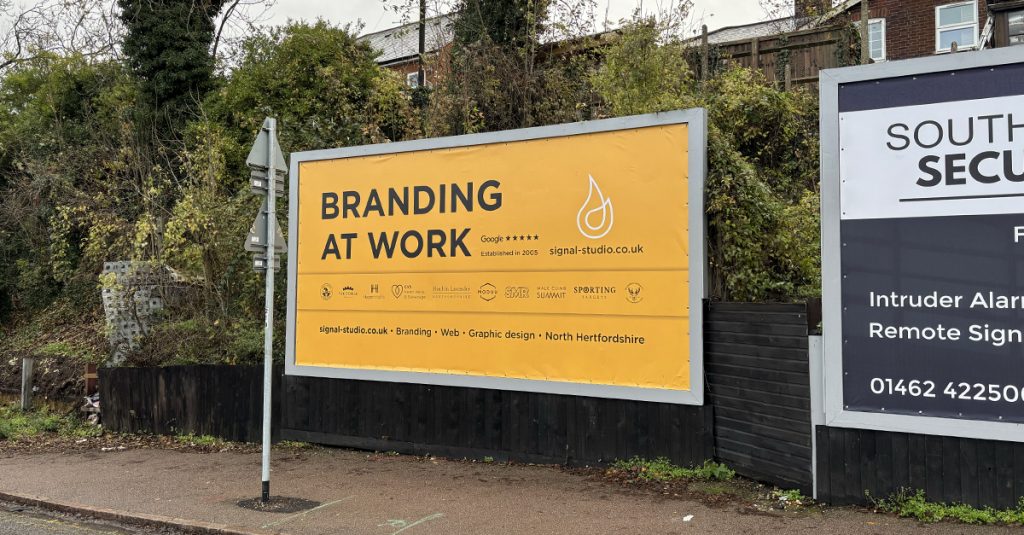
    Put simply: brand awareness, and to showcase my branding design services in Hertfordshire

    When I’m speaking with the lovely people of North Hertfordshire, I’m always surprised by how often they mention a local place or a brand they love, and I find myself saying, “Oh, I look after their branding.”

    The reply is usually some variation of: “Wow, I didn’t know that.”

    This billboard is primarily designed to raise awareness of Signal Studio and the branding, web, and graphic design services I provide.

    What’s the idea behind it?

    Signal’s “Branding at Work” billboard brings together some of the amazing local companies I look after as their BrandDad. The idea is simple: if someone recognises a local brand they already know and trust, they might think…

    Signal Studio look after their brand. I wonder if they could look after mine?”

    The short answer is: yes, I can.

    If you need branding design services in Hertfordshire, and help with graphic design, ideas, or anything in between, get in touch.

    Thanks for reading. And if you’re heading along Cambridge Road in Hitchin, keep an eye out!

    Big love to: North Herts Crusaders • Victoria Jigsaws • Hypertrophy • North Herts & Stevenage CVSHitchin LavenderModuu LivingWalk Climb SummitSporting Targets & Letchworth Rugby Club

  • There’s Space in My Head to Rent

    If you’ve been thinking about updating your branding, sharpening your website or improving your design output, now is a good time. I’ve got an opening for new clients, which doesn’t happen often.

    You might wonder why I suddenly have space.

    The short answer: I recently lost a client.
    The longer answer: it’s a cautionary tale about overstretching.

    When Clients Keep Asking… But Stop Paying

    This client stopped paying their invoices, yet continued to stay in touch to request assets and favours. Eventually, I decided to ask them directly:

    Are you happy with the branding and website design work I’ve delivered?
    Yes, excellent work. Signal Studio is responsive, quick and reliable.

    Are you happy with the way I work and the client care I provide?
    Absolutely. You’re easy to work with and obviously talented.

    Is there anything I could be doing better?
    No, everything’s great. We’ve overstretched ourselves and we can’t pay you.

    Great feedback. Terrible cash flow.

    The Hidden Problem: Your Audience Always Knows

    Here’s the real issue: their audience will eventually notice the decline in brand quality across their platforms. When visuals start slipping and consistency fades, customers begin to wonder:

    If they’ve stopped taking care of their own brand, how well will they take care of me?

    Brand neglect is visible, and it always costs more in the long run.
    A strong brand is not a luxury; it’s the foundation of trust.

    The Upside: Space for New Clients

    The positive outcome is that there’s now room at Signal Studio for businesses that want dependable, senior-level design support, branding, website and creative work done properly and without the stress.

    If that sounds like what you need, I’m here and ready to help.

  • The Christmas Party That Wasn’t

    I genuinely tried to organise the office Christmas party this year for Signal Studio and our developers.

    What could possibly go wrong? As it turns out, quite a lot. From trying to find a date everyone could make, to choosing a venue, an activity and a meal, it quickly became a festive puzzle that refused to fit together.

    First, I discovered something important. You cannot drink alcohol before axe throwing. It may sound obvious, but it didn’t occur to me when I confidently booked and paid the non-refundable fee.

    The venue then informed me that we would each need a wristband to prevent us from buying drinks until we had completed the one-hour axe-throwing session. My friend and excellent coder “Phillis” put it perfectly when he said it would be great to “stand around drinking lemonade for an hour, with a top up during the axe hurling.”

    Tempting, but no.

    Then I thought a BBQ-style meal afterwards would be ideal. Brilliant idea, until I realised the venue only has outdoor seating. Lovely in July. Less charming when it is December and everyone is in festive outfits rather than padded, Arctic-ready jackets.

    I work with fantastic marketing minds at lots of excellent companies every day, so I tried to imagine how they would sell this to the team. No matter how creative I tried to be, there was simply no positive spin strong enough.

    That is when I realised something important. December is already chaos. Why are we adding to it?

    So we are now having an after-Christmas get-together instead. A calmer time, when diaries are not bursting and spirits are a little lighter. And who knows, we might even get to throw that axe after all.

  • Superstition, instinct and why good design for marketing is never a gamble

    I will admit it. I am a little superstitious.

    Not dramatically. I am not throwing salt over my shoulder or avoiding ladders. But I do have small rituals that have followed me into my career as a brand, web and graphic designer working with marketing leaders.

    I say hello to magpies.
    I never give a project a job number until it is officially underway.
    And if something feels wrong in the early creative stage, I pay attention. Instinct is usually right.

    Recently, around Halloween, there was a lot of talk about superstition. It got me thinking about how those little quirks show up in my work and why I think they matter.

    Because here is the thing. Even with my superstitions, I do not rely on luck.

    Great design does not happen by accident.
    A strong brand is not born from chance.
    A website does not succeed because someone got lucky on launch day.

    Effective design comes from clarity, planning, experience and a lot of careful craft. Strategy first, creativity always, superstition just for fun.

    A recent example

    One of my latest projects is a good illustration of that approach. I have just named and designed the brand identity, website and two substantial publications for IndEX (the Industry and Educators Exchange) at www.the-index.uk.

    The work brings together leading organisations and educators to help prepare learners for the future workplace and to strengthen industry pipelines. Partners include forward-thinking organisations such as Google, Newham Data, Intelligent Light and MADIC.

    One of the printed books has a thirty-millimetre spine, which gives you an idea of the scale and ambition. It is a serious piece of work designed to support meaningful collaboration between education and industry while helping learners build real future-ready skills.

    Projects like this do not come together by chance. They come from process, partnership, listening, shaping, questioning and building ideas with purpose. There may be a magpie greeting in the background, but everything else is strategy, craft and clarity.

    Bringing it back to superstition

    If your brand or website feels like it is running on hope and habit, it might be time to put something more reliable behind it.

    I will keep greeting magpies. That is not going anywhere.
    But when it comes to your brand, everything has intention, structure and purpose.

    If you want design that is built on insight rather than good fortune, I would love to talk.

  • That Oasis Reunion


    Getting the Brand Back Together.

    The Oasis reunion gigs got me thinking about them as a band, and laterally, as a supersonic brand.

    That’s what Oasis do well, they were, and remain, a living, breathing brand.

    But they haven’t evolved; it’s the same tired sing-alongs and sibling rivalry-fuelled gossip that keeps them in the public eye.

    However, brands (and bands) must evolve to attract younger fans or, in business terms, new customers.

    Your brand design can’t afford to stand still. It needs regular reviews to stay relevant. The same goes for your website design; it needs updating to remain useful.

    There’s no “Definitely Maybe” about it. If you want your business brand to “Live Forever,” I can help.


    Are you looking for brand design in Letchworth?

    Please get in touch to learn more

  • Stop Bloody Raining!


    Amidst the current dampness, we’ve got some inspiring (and dry) news to share!

    While the heavens have been soaking everything in sight, we’ve been busy launching something we’re really proud of: A new modern brand identity and a responsive website design for the Engineering Skills College in East London.


    We designed a fingerprint-inspired logo (made up of the letters ESC) to symbolise the unique way in which every apprentice touches each project they work on, emphasising individuality and innovation.


    The fully responsive website design features a Content Management System (CMS) that allows easy updates and dynamic customisation. Each webpage can be individually styled and ordered within a pre-designed framework. This ensures flexibility while maintaining brand consistency, allowing the college to tailor content as needed.

    So, while we’re stuck inside avoiding this damm rain, why not check out the Engineering Skills College website.


    Are you a School, College or University looking for brand design in Hertfordshire?

    Please get in touch to learn more